

How I Use Solscan to Track Tokens on Solana — Practical Tips from the Trenches


Okay, so check this out—if you use Solana every day like I do, a reliable explorer isn’t optional. Wow! Solscan has become my go-to when I’m trying to untangle a messy token transfer or verify a mint. At first glance it looks simple, but there are layers you only notice after you poke around and make a few mistakes (oh, and you will make some). My instinct said “trust the UI,” though actually, wait—let me rephrase that: trust the data, not the labels. This matters more than you think when money’s involved.
First off: what counts as a good token tracker? Short answer: clarity, history, and guardrails. Long answer: the ability to see mint addresses, token holders, transaction provenance, and cross-program interactions all in one place, with an API to export the stuff you’re studying. Solscan gives you a clean token page that shows holders, transfers, recent transactions, and the on-chain metadata that links to the token’s image or JSON. Seriously?
Here’s a quick workflow I use when a new token pops up and I want to vet it fast. Step one: copy the token mint and paste it into Solscan’s search. Step two: check the token info—decimals, supply, and verified metadata if available. Step three: jump to the holders tab and scan for suspicious concentration—if a handful of addresses own most of the supply, that’s red. Step four: inspect recent transfers and trace back to the first minting transaction to see if it came from a known program or a freshly created wallet. Something felt off about that first 0.01 SOL mint once, and tracing it saved a friend from a rug—true story, though I won’t name names. Hmm…
On one hand explorers show you raw on-chain truth. On the other hand labels and external links can mislead. Initially I thought token pages with logos meant the project was legit, but then I realized logos are just metadata fields anyone can populate. So don’t be fooled. Use the “first transaction” and “creator” data to confirm provenance. It’s not sexy, but it works. Also, export the holders CSV when you need to run quick distribution stats in a spreadsheet; Solscan supports that, which is super handy when you’re doing due diligence across several tokens.
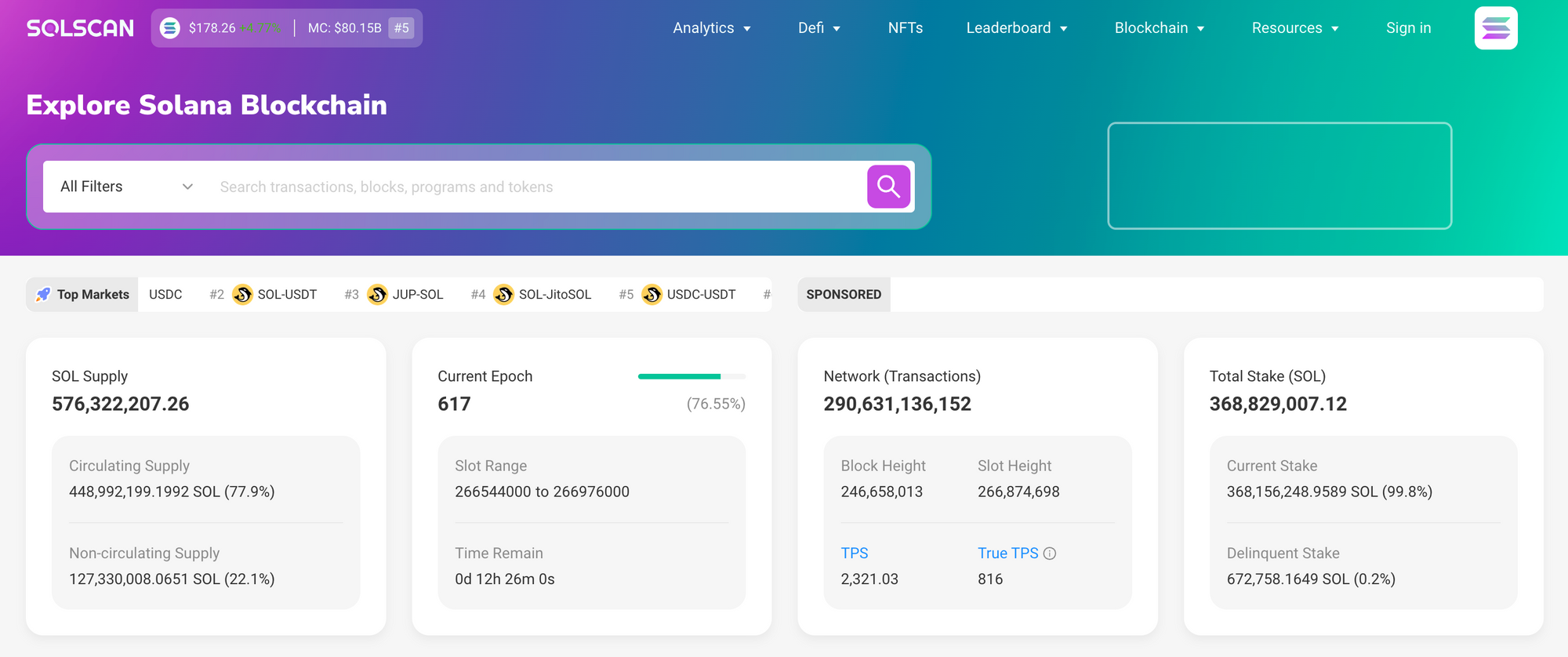
A practical tip: bookmark, label, and cross-check (and a link I trust)
Bookmark tokens you watch and add notes in your local tracker. I’ll be honest—keeping a manual watchlist saved me time and a lot of dumb mistakes. Check the explorer’s program interactions for decentralized exchange activity and liquidity pool deposits; if a token has minimal swap volume but huge wallet concentration, treat it like an unknown. For a reliable place to start exploring these views, see this resource: https://sites.google.com/cryptowalletextensionus.com/solscan-explorer-official-site/ —it points to Solscan features and practical screenshots that helped me learn the interface.
Now for some advanced reads. Use the “Program Log” and “Instruction” views on transactions to see what a program actually did during execution. This is especially useful when a token move involves multiple program calls—say a swap then a liquidity withdraw. If you’re comfortable reading raw instructions, you can detect obfuscated minting or hidden fees. On-chain forensic work is slow work. It rewards patience and curiosity. I’m biased, but this part of the job is oddly satisfying.
There are common pitfalls. One: trusting that a token name equals legitimacy. Two: assuming holders labeled by third-party services are accurate. Three: ignoring associated token accounts—tokens can be distributed across many ATA addresses and still be controlled by a few keys. Also, watch for wrapped tokens and cross-chain bridges; transfers that look like normal swaps sometimes hide bridge mechanics that carry different risks.
Tools and features I use frequently: the search bar with filters, holders CSV export, the “rich list” view, the transaction instruction breakdown, and the API endpoints for programmatic monitoring. I run periodic scripts that poll token transfers and alert me to sudden spikes in sell pressure or new large holders emerging. Initially that sounded overkill. Then a morning spike once wiped a tiny portfolio. So yeah, now I automate the noisy stuff and focus on interpretation.
Some soft advice: develop a checklist and stick to it under pressure. Trading FOMO is real. When gas is cheap and the market moves fast, it’s tempting to skip verification steps. Don’t. Take two minutes to confirm the mint and creator. Two minutes saved is often thousands lost avoided. Also, talk to the community—Discord or Twitter threads sometimes surface warnings you won’t find on-chain. But… be careful there too; social proof can be manufactured.
Common questions I see
How do I confirm a token’s authenticity?
Check the mint address on the token’s Solscan page, review the first transactions and creator address, and compare metadata to the project’s official communications. Verify that the token’s total supply and decimals match the project’s docs, and look for any large pre-minted allocations to single addresses.



この記事へのコメントはありません。